
Property Records Amador County
Amador County property records are maintained by the clerk-recorder office in Jackson and cover all parcels in the Gold Country region. The county uses RecorderWorks software for online document searches which provides access to recorded deeds, liens, and other real estate instruments. Property assessment data is available through the assessor office while tax information can be found through the tax collector. Most records are public and free to view online though certified copies require payment of fees. These files include grant deeds, trust deeds, mechanic liens, property tax rolls, and assessment records for the entire county.
Amador County Details
Clerk-Recorder Services
The Amador County Clerk-Recorder sits at 810 Court Street in Jackson. Counter hours run from nine in the morning until four in the afternoon Monday through Friday. Call 209-223-6468 with questions about recording or to request copies of documents. The office handles all official recordings of deeds, liens, and other property instruments for the county.
Online searches use the RecorderWorks system. Visit mint.amadorgov.org/RecorderWorksInternet to search the database. You can look up documents by grantor name, grantee name, document type, or recording date. The system shows index information and in many cases provides scanned images of the actual documents. This portal is free to use for searches and viewing.
Recording fees in Amador County follow the standard California structure. The base is fifteen dollars for the first page and three dollars for each additional page. Senate Bill 2 adds a seventy-five dollar fee for most real estate transfers to fund affordable housing statewide. Other fees include the real estate fraud fee and monument preservation fee. The total cost depends on how many pages your document has and what type it is.
Documents can be submitted for recording in person at the Jackson office, by mail, or through approved e-recording vendors. In-person submissions get recorded the same day if received before the cutoff time. Mail submissions are processed in the order they arrive. E-recording provides the fastest turnaround with documents often recorded within hours of submission. The clerk stamps each document with the date and time of recording which establishes priority.
Assessment and Tax Data
The assessor office determines property values for tax purposes. Every parcel in Amador County gets assessed each year. The assessor maintains maps showing property boundaries, parcel numbers, and ownership information. You can search assessor data online to find property details like square footage, year built, and current assessed value. Assessment rolls are public records available for inspection.
Property taxes in Amador County are due in two installments. The first payment is due November 1st and becomes delinquent after December 10th. The second payment is due February 1st with a delinquency date of April 10th. Late payments incur a ten percent penalty immediately. Additional costs and penalties accumulate if the bill remains unpaid. After five years of delinquency, the property can be sold at a tax auction.
The tax collector handles billing and collection of property taxes. You can pay online, by mail, or in person. The tax collector website shows your current bill, payment history, and any penalties. Electronic check payments are usually free while credit card payments have a service fee. Keep your receipt as proof of payment. If you sell property mid-year, taxes are prorated between buyer and seller at closing.
Assessment appeals are available if you believe your property value is set too high. File your appeal between July 2nd and September 15th for regular assessments. Supplemental assessments must be appealed within sixty days of the notice. The county appeals board reviews your case and decides whether to adjust the value. Bring evidence such as recent sales of comparable properties or documentation of property damage or defects.
How to Search Amador Property Files
Begin with the RecorderWorks portal for deed and lien searches. Enter the name of the property owner or the person who sold the property. The system returns all matching documents. Click on a result to see details and view the scanned image if available. You can print images directly from the portal or save them to your computer. There is no charge for viewing documents online.
For property assessment information, check the assessor website or call the assessor office. Staff can look up parcels by address or APN. They will tell you the assessed value, property description, and owner of record. Assessment data is public and free to access. The assessor office is in the same building as the clerk-recorder in Jackson.
Tax lookups are available through the tax collector portal or by phone. Enter your parcel number to see current and past bills. The system shows payment status and any penalties or defaults. You can pay your bill online through the same portal. Have your parcel number ready when you call or visit. The number appears on your tax bill and on assessor maps.
In-person research is available at the clerk-recorder office during business hours. Staff can assist with finding documents or explain how to use the public search terminals. Bring identification and be prepared to sign in. If you need copies of documents, staff will process your request while you wait or mail them if you prefer. Copy fees apply for both plain and certified copies.
Note: Amador County has no cities with populations over 100,000. The largest communities are Jackson, Sutter Creek, and Ione. All property records are maintained at the county level regardless of which community the property is located in.
California Property Recording Law
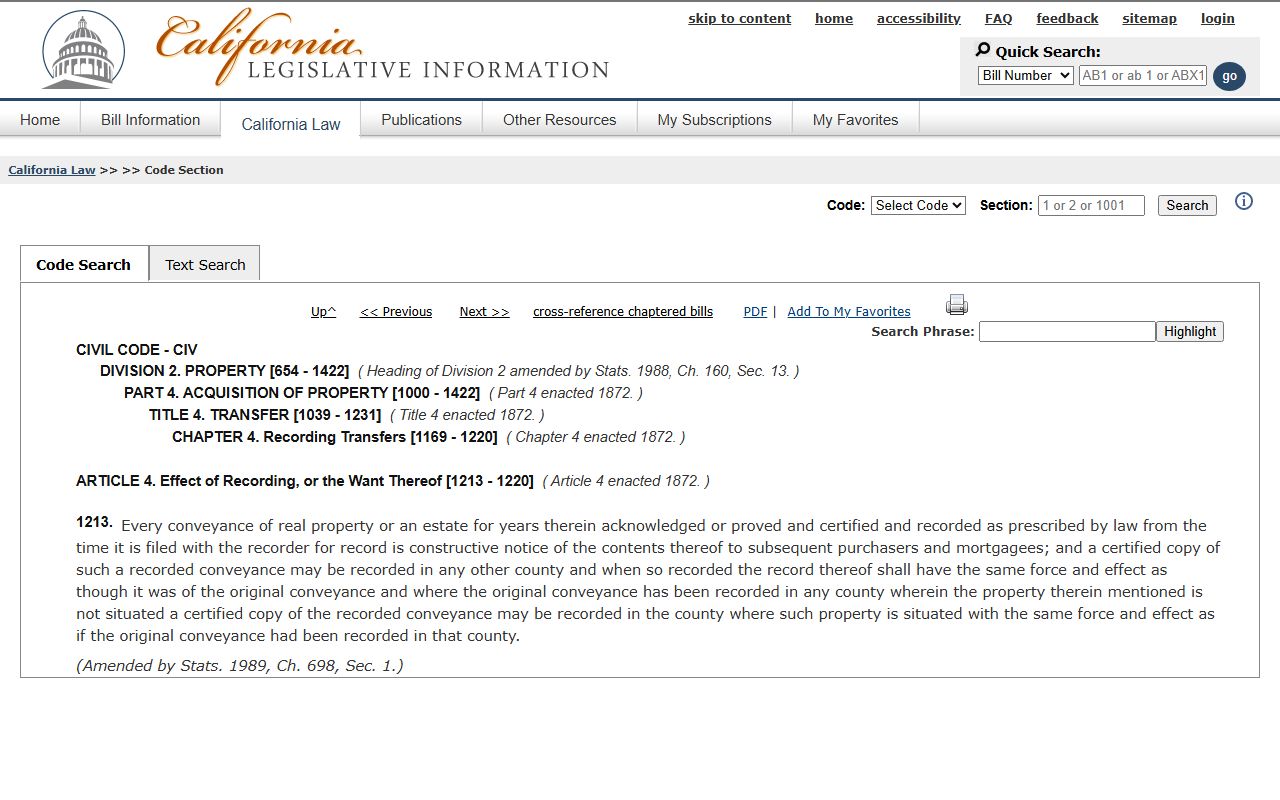
California Civil Code section 1213 requires recording of deeds and other property conveyances to provide legal notice. A properly recorded document gives constructive notice to all subsequent buyers and lenders. This protects your ownership rights. If you buy property and do not record the deed, someone else could potentially claim an interest in the same property and win if they record first.
Government Code section 27320 directs the county recorder to timestamp and index every document submitted for recording. This timestamp determines priority when multiple claims are filed against the same property. The recorder also checks that documents meet format requirements such as margins, font size, and paper quality. Documents that do not meet standards can be rejected.
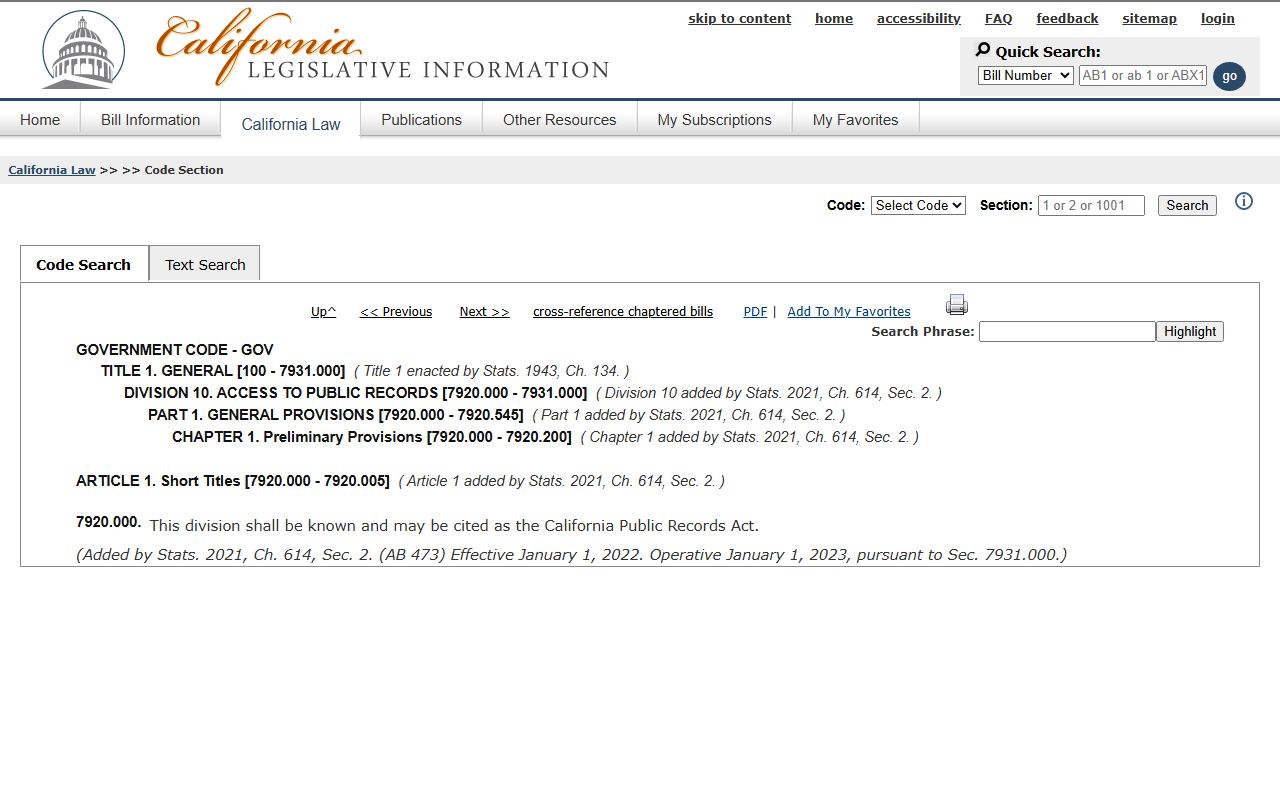
The California Public Records Act at Government Code section 7920 establishes that most government records are public. Property records fall under this law. Anyone can access recorded deeds, liens, and related documents without needing to state a reason. Some information is protected such as social security numbers which are redacted before documents are scanned. Visit leginfo.legislature.ca.gov to read the full text of the Public Records Act.
Adjacent Counties
Amador County borders several other counties in the Gold Country and Sierra Nevada foothills.