
Merced County Property Records
Property records in Merced County are kept by the Assessor-Clerk-Recorder office at 2222 M Street in Merced. This office combines three county functions at one location. You can file deeds, check property values, and search recorder indexes all in the same building. The office serves both the city of Merced and surrounding agricultural areas in the Central Valley. Staff can help you record new documents or find old ones. Call 209-385-7631 for information about recording fees or to ask questions about your property assessment. Most property records are public under California law. When you buy or sell real estate in Merced County, the deed must be recorded at this office to give legal notice of the ownership change. Recording fees follow state guidelines with local additions for housing and fraud prevention programs.
Merced County Quick Facts
Merced County Assessor-Clerk-Recorder
The Assessor-Clerk-Recorder office in Merced County is at 2222 M Street in the city of Merced. Phone 209-385-7631 if you have questions. This office handles property assessments, document recording, and clerk services. Staff can search the recorder index by name or document number. They can also answer questions about your property tax assessment and how values are calculated in Merced County.
When you visit, bring your deed or other documents for recording. The recorder will stamp the date and time on each page. This timestamp sets priority if two people file similar claims on the same day. Under California law, the first to record usually wins. The office keeps an index of all recorded documents going back many years. You can search this index to see who owns property or if there are liens on file.
For property tax payment questions, contact the Merced County Tax Collector. That office is separate from the Assessor-Clerk-Recorder. The Tax Collector handles tax bills and accepts payments. The Assessor sets property values. The Recorder handles document filing. Each function has its own staff in Merced County even though they may share the same building.
| Office Location |
2222 M Street Merced, CA 95340 |
|---|---|
| Phone | (209) 385-7631 |
| Services | Recording, Assessments, Property Search |
Recording Fees in Merced County
Recording fees in Merced County follow California state law. The base fee is fifteen dollars for the first page of any document. Each extra page costs four dollars more. Senate Bill 2 adds seventy-five dollars per real estate transaction. This fee funds affordable housing programs across California. Some counties also charge a fraud prevention fee and a monument preservation fee. The total cost to record a simple one-page deed is about ninety to one hundred dollars in most counties.
Copy fees are separate from recording fees. Plain copies cost a few dollars per page. Certified copies cost more because the clerk stamps and signs each one. Certification proves the copy is a true image of the original on file. Banks and title companies often need certified copies when they review property records in Merced County. Check with the office for exact copy fees before you visit or mail a request.
Fees can change when state law updates or the county adjusts local rates. Always verify the current cost before you mail payment or visit to record documents. Most counties post fee schedules on their websites. You can also call the office to ask about fees and accepted payment methods.
Note: Bring a check or money order when you visit, as some counties do not accept credit cards for recording fees.
Property Documents in Merced County
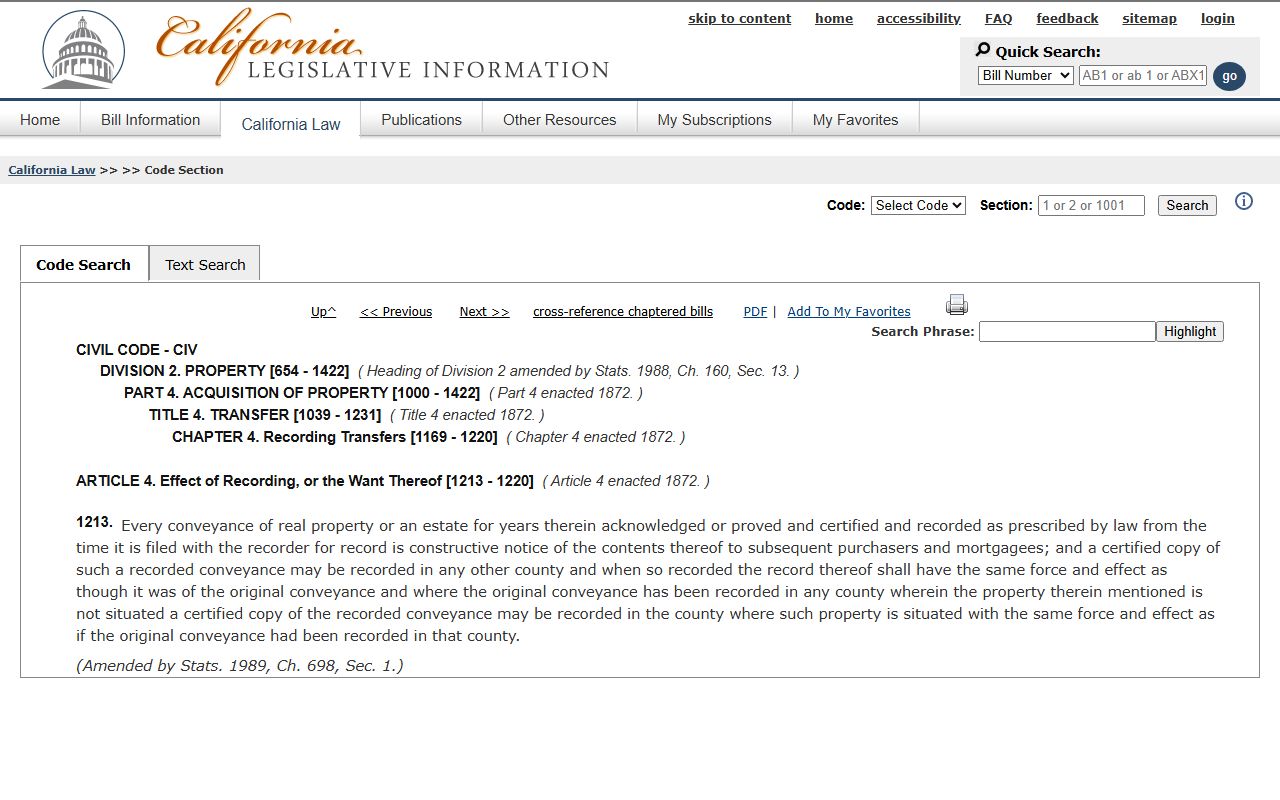
Grant deeds transfer ownership in California. When you buy property in Merced County, the seller signs a grant deed. That deed goes to the Assessor-Clerk-Recorder for recording. Once recorded, it becomes public record. Anyone can search the index to see who owns a piece of property. Recording gives legal notice of the ownership change under California Civil Code section 1213.
Trust deeds secure loans on real estate. You sign a trust deed when you borrow money to buy property. The lender holds the deed until you pay off the loan. When the loan is paid, the lender files a reconveyance. That removes the lien from your title. Most home loans in Merced County use trust deeds instead of mortgages. Trust deeds allow faster foreclosure if the borrower stops paying.
Liens show debts tied to property. A contractor who is not paid may file a mechanic lien. The IRS can file a federal tax lien for unpaid taxes. The state can file a lien for unpaid income tax. All these liens are recorded at the Assessor-Clerk-Recorder office. They attach to the property and must be paid before you can sell with clear title in Merced County.
Common property documents include:
- Grant deeds and quitclaim deeds
- Deeds of trust and reconveyances
- Mechanic liens and tax liens
- Notices of default and trustee sales
- Property tax bills and payment records
- Parcel maps and legal descriptions
Each document serves a purpose. Deeds transfer ownership. Trust deeds secure debts. Liens show claims. All are kept on file at the Assessor-Clerk-Recorder in Merced County.
Property Taxes in Merced County
Property tax bills in Merced County are due in two installments each year. The first half is due by December 10. The second half is due by April 10. A ten percent penalty applies if you pay late. This penalty hits on the day after each due date. After April, an additional cost is added. These deadlines are set by California state law and apply to all counties.
Your tax bill is based on the assessed value of your property. Merced County uses the Proposition 13 rate of one percent as the base. Local bonds and special assessments may add to that rate. The total rate varies by location. Some areas have voter-approved bonds for schools or fire districts. You can see the exact rate on your annual tax bill.
If you do not pay by the April deadline, your account goes into default after June 30. Default adds more penalties and fees. The county may eventually sell the property at a tax auction to recover the unpaid taxes. Tax sales are public. Anyone can bid. To avoid this, pay your taxes on time each year. Contact the Merced County Tax Collector if you need help setting up a payment plan.
Assessment Appeals
You can appeal your property assessment if you think it is too high. The appeal window runs from July 2 to September 15 in most California counties. Some extend the deadline to November 30. File your appeal with the county assessment appeals board. This board is separate from the Assessor office. They hold hearings where you present evidence that your property is worth less than the assessed value.
Bring data on recent sales of similar properties in Merced County. Photos and repair estimates can help your case. The board will listen to both sides and make a decision. If they agree with you, they lower your assessment. That means a lower tax bill. If they side with the Assessor, the value stays the same. You can try again next year.
The California State Board of Equalization provides guides on how to file an assessment appeal. Visit boe.ca.gov/proptaxes/faqs/assessappeals.htm for forms and tips. Most people do not need a lawyer for an appeal. You can represent yourself with the right documents.
California Property Record Laws
The California Public Records Act gives you the right to see most government files. Property records are public under this law. Anyone can ask to see deeds, liens, and tax records. You do not need to be the owner. You do not need to say why you want them. The county must provide access unless a specific rule blocks it. Most property records have no block.
Civil Code section 1213 requires recording to give legal notice. A recorded deed tells the world who owns the property. An unrecorded deed can still be valid between buyer and seller, but it does not protect the buyer if someone else buys the same property and records first. This is the race-notice rule under Civil Code section 1214. Recording protects your ownership in Merced County.
Government Code section 27320 tells the recorder what to do when you bring in a document. The recorder stamps the date and time on it. This timestamp sets priority. If two people file similar claims on the same day, the one with the earlier time wins. The recorder also checks that the document meets format rules. It must fit on standard paper with proper margins.
Revenue and Taxation Code section 60 defines what counts as a change in ownership for tax purposes. A sale triggers reassessment. But some transfers do not cause reassessment. For example, a transfer between spouses or from parent to child may not change the assessed value. Ask the Merced County Assessor if you are unsure.
Nearby Counties
If you need property records from neighboring areas, check these counties: